
Sustainable fashion is often discussed as a modern trend, but many of the ideas behind it are much older.
Repairing clothing, passing garments between family members, reusing fabrics, adapting pieces as our needs change, and creating something new from what we already have are practices that have existed across cultures and generations.
For me, sustainable fashion is therefore not simply a trend. It is a way of thinking about the clothes we create, buy, wear, and preserve.
Terms such as sustainable fashion, conscious fashion, ethical fashion, and eco-fashion may emphasize different aspects of the industry, but they share an important question: How can we enjoy fashion while being more thoughtful about the resources, people, and communities connected to it?
What Is Sustainable Fashion?
Sustainable fashion is an approach to clothing that considers its impact throughout its lifecycle, from design and materials to production, use, care, reuse, and eventually disposal. Responsibility doesn’t belong only to designers or only to consumers.
Designers can make more thoughtful decisions about materials, production, waste, durability, and how garments are designed to be used. Consumers can also influence the lifecycle of clothing through what they buy, how frequently they buy, how they care for their garments, and what they do with pieces they no longer wear.
One practical way to think about this is through the 7 Rs of sustainable fashion: Reduce, Reuse, Recycle, Rethink, Repurpose, Repair, and Rent. Safa structured her original article around these seven practices as a framework for approaching fashion more consciously.
1. Reduce
The first step can simply be buying less. Instead of responding to every new trend, consider whether a new garment genuinely adds something useful to your wardrobe. Choosing pieces that reflect your personal style, can be worn repeatedly, and aren’t dependent on a single short-lived trend can help you build a wardrobe with greater longevity.
The goal isn’t to stop enjoying fashion. It’s to become more intentional about what earns a place in your wardrobe.
2. Reuse
A garment may no longer work for you without having reached the end of its useful life. Clothes that are still wearable can be passed to family or friends, donated, or otherwise given another opportunity to be worn.
Keeping garments in use for longer challenges the idea that clothing should automatically become waste once its first owner no longer wants it.
3. Recycle
When clothing can no longer be worn, recycling may provide another option. Depending on the materials and recycling services available, textiles may be collected and processed rather than immediately discarded.
Recycling is only one part of the picture, however. Before reaching that stage, it is worth asking whether a garment could first be reused, repaired, redesigned, or repurposed.
4. Rethink & Research
Being a conscious consumer doesn’t require becoming an expert in the fashion industry. It begins with curiosity. Consider the clothing you buy, its quality and versatility, and whether it fits your actual lifestyle rather than a temporary trend.
Rethinking also means examining our own shopping habits. Do we need something new, or could we style, alter, or rediscover something we already own? Small questions can lead to more thoughtful decisions.
5. Repurpose
Repurposing is where sustainability and creativity can meet. An existing garment, textile, or even an unexpected everyday object can sometimes become the starting point for something entirely different.
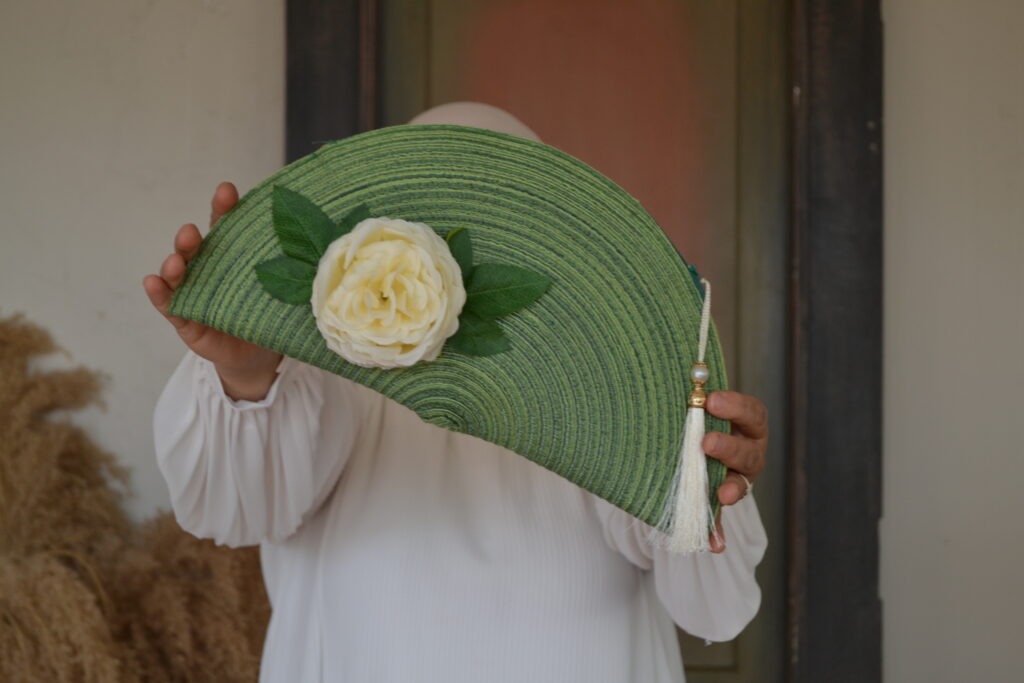
At Ward by Safa, one example began with an item originally used as a table setting. Instead of discarding it when it was no longer needed for its original purpose, Safa transformed it into a functional and stylish clutch bag. The result demonstrates what upcycling can do: recognize potential in something overlooked and give it a completely new purpose.
Repurposing can be as ambitious as redesigning an entire garment or as simple as transforming fabric scraps into accessories or decorative details.
6. Repair
Sometimes a garment doesn’t need to be replaced. It simply needs attention. Repairing, altering, dyeing, embellishing, or adjusting an existing piece can extend its life while also creating something more personal.
One Ward by Safa example involved transforming a small white scarf by adding a green tassel. The addition gave the existing piece a different proportion, more colour, and a renewed personality without requiring an entirely new accessory.
Small interventions can sometimes completely change how we feel about something we already own.
7. Rent
Not every occasion requires owning something new. For clothing that may only be worn once or occasionally, renting can offer an alternative to purchasing another garment that might spend most of its life unworn.
This can be particularly relevant for special occasions, where our desire for a different look doesn’t necessarily mean we need permanent ownership of another piece.
Sustainable Fashion Is Personal to Me
My relationship with sustainable fashion began long before I knew it by that name. I grew up in a family deeply connected to tailoring and fashion. Through my mother and sisters, I learned about making things by hand, creativity, resourcefulness, colour, nature, heritage, and the value of preserving what we already have.
Even our family celebrations, including my wedding, included handmade pieces created by my mother and sisters. Those experiences shaped the way I came to understand clothing: not simply as something we purchase and eventually discard, but as something capable of carrying craftsmanship, memory, and meaning.
That became particularly important to me as my own body changed over time. Instead of letting go of meaningful garments made by my mother and sisters simply because they no longer fitted me in the same way, I became interested in adapting and preserving them.
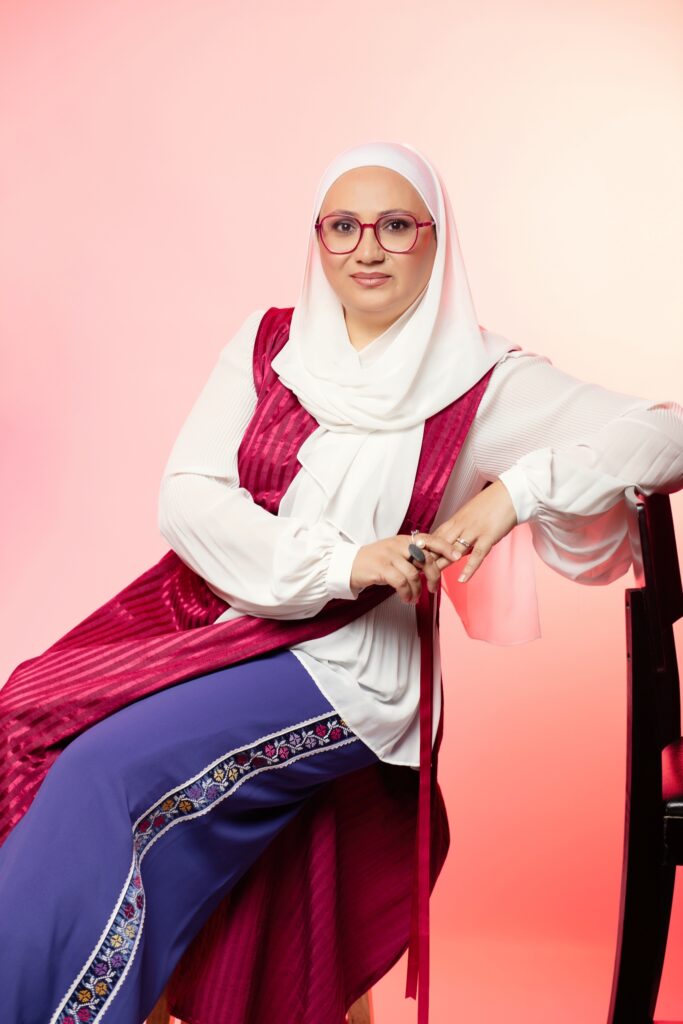
One outfit, for example, was redesigned by altering the trousers to accommodate my new size and introducing traditional fabric as a new design element. The change allowed the piece to continue being worn while bringing together contemporary styling and heritage-inspired detail.
Experiences like these eventually influenced my approach to creating multi-use clothing and accessories that can adapt across seasons, occasions, and different moments in our lives.
How the 7 Rs Connect to Ward by Safa
For Ward by Safa, sustainability isn’t limited to choosing a particular fabric. It can also mean asking how a piece can last longer, adapt, be transformed, or avoid becoming waste.
This thinking appears throughout our approach to redesign and upcycling: working with existing garments, leftover textiles, meaningful pieces, and unexpected materials to explore what they could become next.
It also reflects something deeply personal to the Ward philosophy: clothing can carry memories. Sometimes preserving a garment doesn’t mean keeping it exactly as it was. Giving it a new form can be another way of allowing its story to continue.
Is Sustainable Fashion a Trend?
The language surrounding sustainable fashion may evolve, but the principles behind it are not new. Reducing unnecessary consumption, reusing what still has value, repairing what can be saved, repurposing materials, and passing garments from one person to another have existed for generations.
Sustainable fashion is therefore bigger than an aesthetic or seasonal movement. It asks designers and consumers alike to reconsider what we value, how we use resources, and how long the things we create deserve to remain part of our lives.
And that change doesn’t have to begin with something enormous. It can begin with one garment you decide to repair instead of replace, one piece you pass on instead of discard, or one forgotten item you choose to see differently.